The Art of Seeing Mexico
Mexico travel stories often begin with ancient civilizations, colorful streets or unforgettable food. Mine began with an art historian.
In 2020 — at the height of the pandemic — life felt stranger than ever.
But by November, a few destinations were beginning to reopen, and Mexico was one of them.
As we discussed the itinerary, my travel agent mentioned Michelle, an art historian she thought would be a perfect match for me. She had a doctorate and a reputation for bringing history and culture to life.
I loved the idea immediately and asked Sandra to see if it could be arranged.
At the time, I thought I was simply hiring a guide.
What I didn’t know was that Michelle would become much more than a guide.
There was one aspect of the trip the pandemic refused to spare: photography. Masks were everywhere, and no matter how beautiful the places were, they inevitably became part of the images I brought home. As a photographer, I have to admit they weren’t my favorite souvenir.
My first morning in Mexico began with Michelle picking me up, and we started getting to know each other.
She was happy to be back at work and excited to practice her Portuguese. I was glad to help — and even happier to discover Mexico through her eyes.
I immediately noticed how easygoing she was. Conversation flowed effortlessly, and the journey began on an easy note.
On the way to Teotihuacán, we made a quick stop at the Ex-Convent of Acolman, a sixteenth-century monastery built as one of the earliest centers for evangelization after the Spanish conquest.
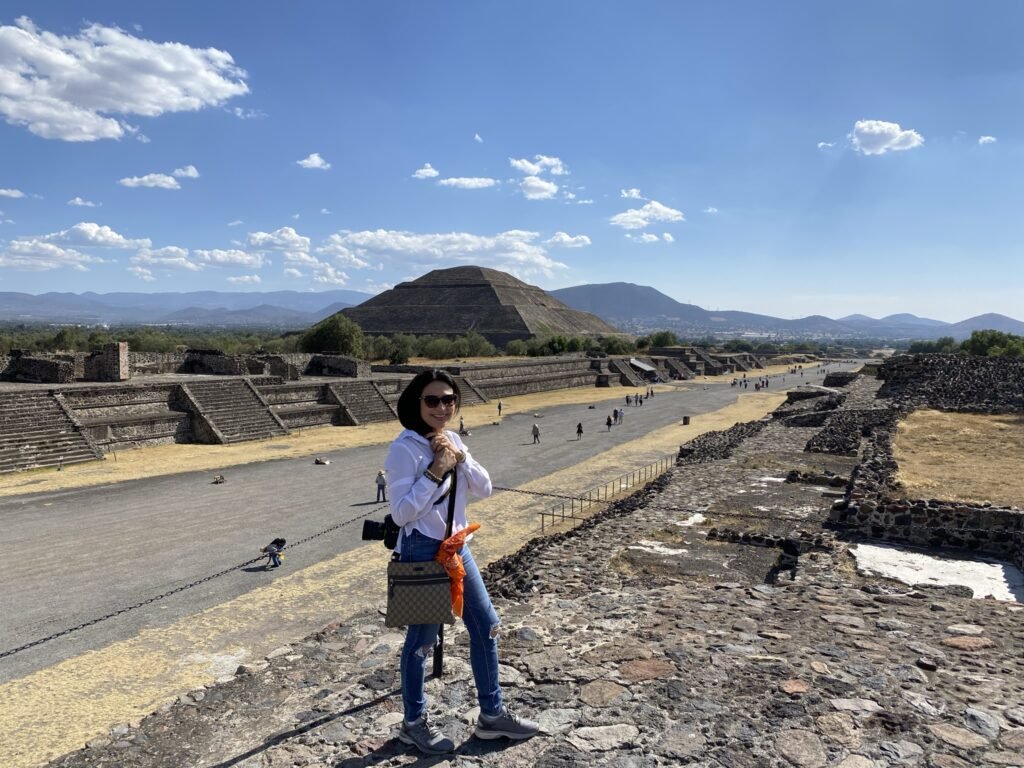
The pandemic was keeping most visitors away, and our first steps along the Avenue of the Dead were shared with only a handful of tourists, making the city’s scale even more impressive.
✦ Footnotes from Elsewhere
The people who built Teotihuacán remain a mystery. By the time the Aztecs arrived in the 14th century, the city had already been abandoned for centuries. They were so impressed by its monumental pyramids that they named it Teotihuacán — “the place where the gods were created.” Based on archaeological evidence, the city may once have been home to more than 100,000 inhabitants, making it one of the largest urban centers in the world at the time.
We began our walk at the Citadel — home to the Temple of the Feathered Serpent (Quetzalcóatl) — and followed the Avenue of the Dead all the way to the Pyramid of the Moon, with the Pyramid of the Sun rising along the route.
Unfortunately, it wasn’t my best day for walking. During the night, I had kicked a hotel-room pouf with far more force than I knew I was capable of. It hurt with every step, but I ignored it. Only after returning to Brazil did I finally get an X-ray.
“No wonder walking around Mexico was so painful,” the doctor said. “You broke your toe.”
Even though every step was painful, it didn’t stop me from properly exploring the site, looking for different perspectives and climbing some of the smaller platforms along the way.
The sheer scale and perfect symmetry were rivalled only by the mystery surrounding its construction and the poetic names of its monuments.
Well… except for the rather ominous Avenue of the Dead. Its name wasn’t given by the people who built the city, but by the Aztecs centuries later — and they were probably wrong.
From the foot of the Pyramid of the Sun, my eyes followed the staircase as it changed shape on its way to the summit. I couldn’t help wondering what the view from the top must be like.
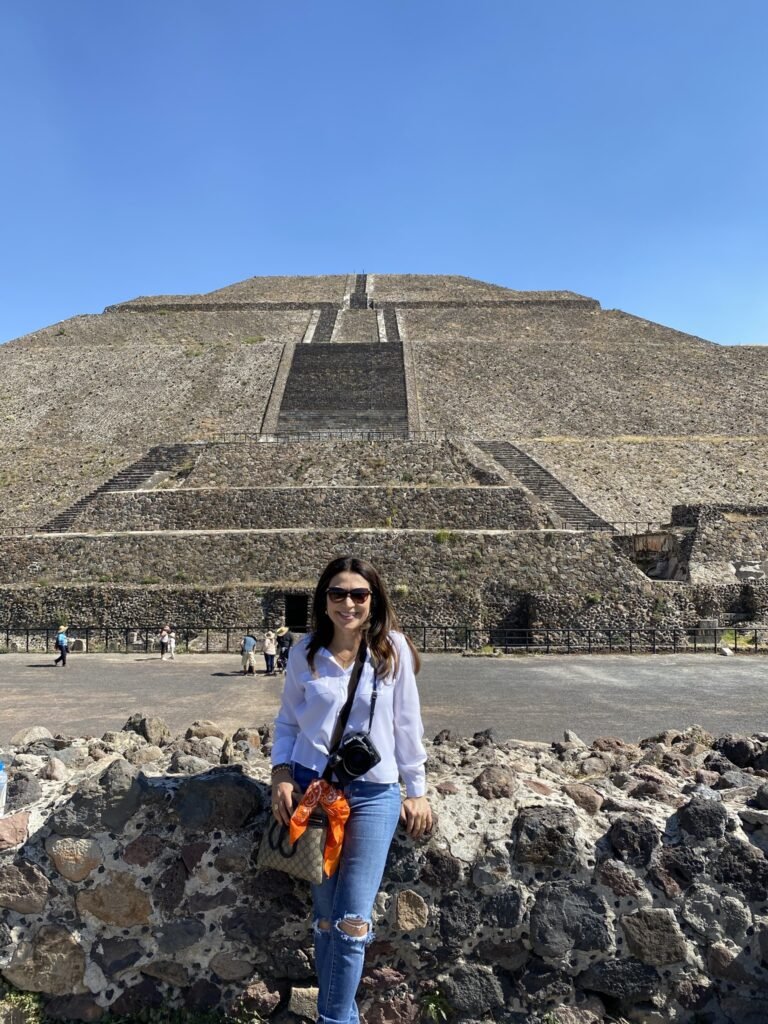
Michelle then broke the news: climbing the pyramids was no longer allowed.
My toe, however, seemed perfectly happy with that decision.
Teotihuacán is the kind of place you leave with more questions than answers.
Who lived there?
What did they call their city?
How on earth did they build all this?
If the Aztecs themselves seem ancient to us, what does that make the civilization that came centuries before them?
Michelle wasn’t about to slow things down. She took me straight to contemporary art at the Museo Jumex. From its terrace, the futuristic curves of the Soumaya Museum dominated the view.
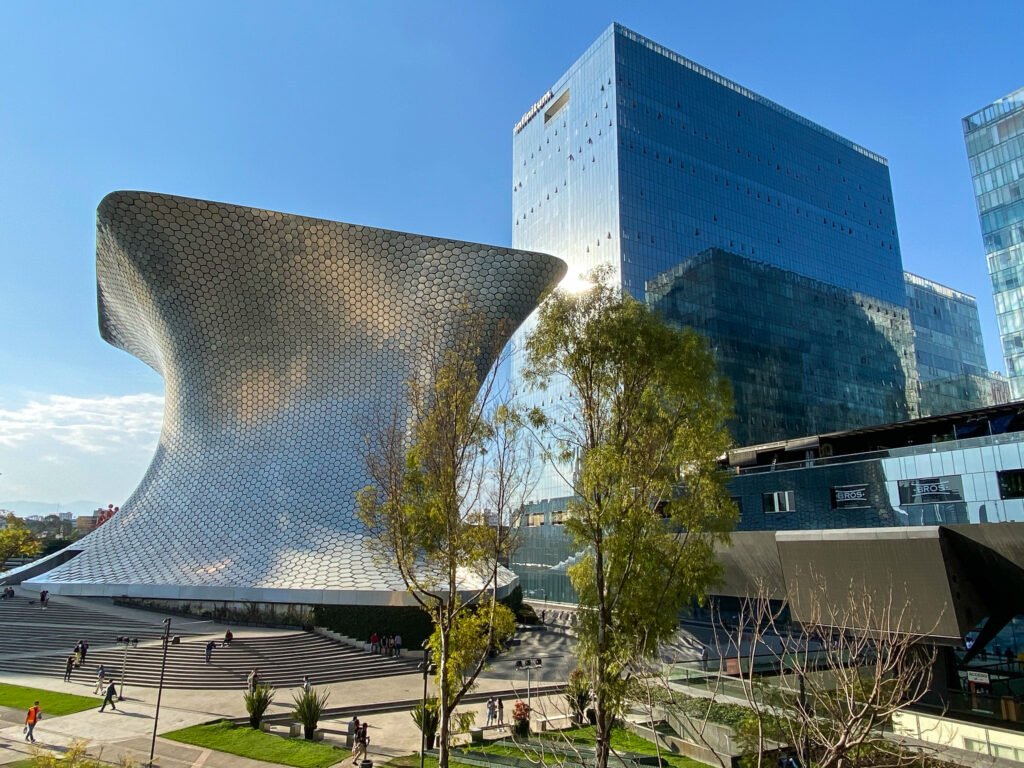
I felt as though I had boarded a train from the distant past straight into a future that hadn’t arrived yet.
A day spent crossing centuries eventually gave way to dinner.
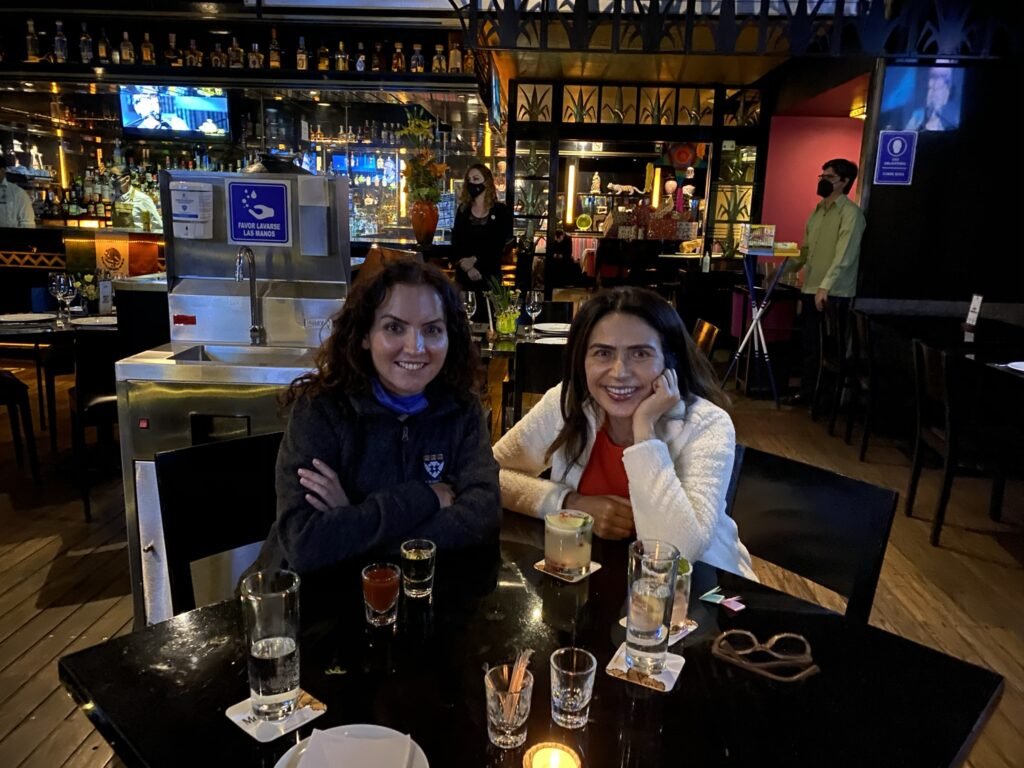
That was also where we discovered our first shared passion: margaritas.
Soon food came. Then spices.
It didn’t take long for me to realize that Art History wasn’t Michelle’s only area of expertise. She seemed to hold a second doctorate — in Mexican food and spices.
I never turned down any of her recommendations, even when they came with a warning about the heat. Every single one was worth it.
Before we said goodbye that evening, Michelle promised to introduce me to even more of Mexican cuisine the following day.
Back at my hotel, my toe still hurt, but it no longer seemed quite so important.
Where Eras Collide
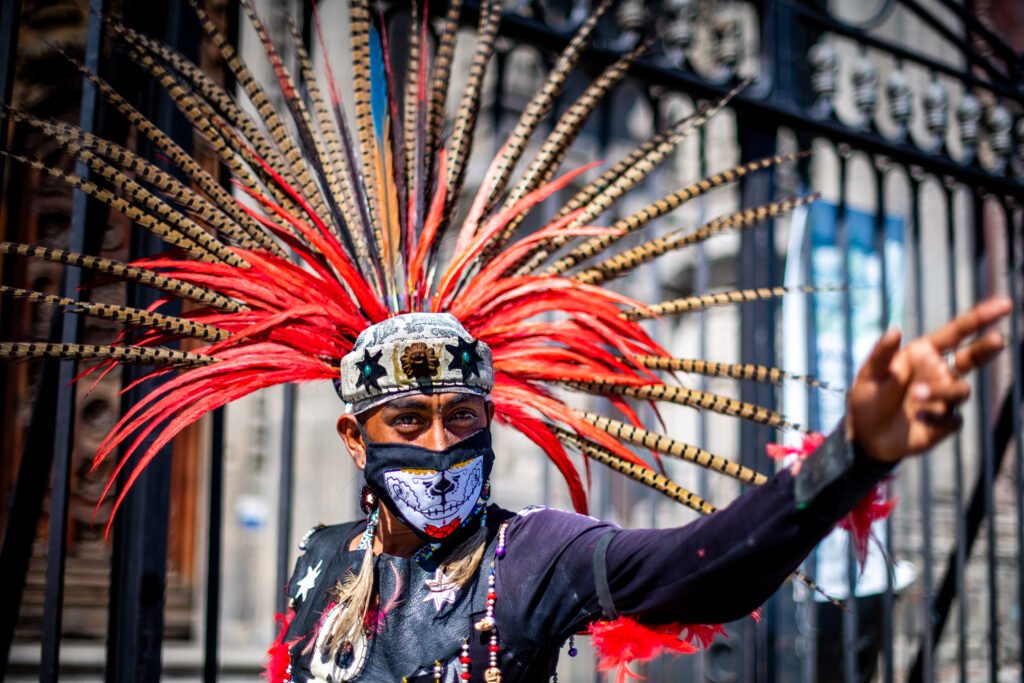
Few places reveal Mexico’s complex history more vividly than this.
The Templo Mayor and the Metropolitan Cathedral stand just a few meters apart.
One was the main religious center of the Aztec capital. The other — the largest cathedral in Latin America — was built partly with stones taken from that very temple.
Centuries later, both monuments occupy the same small stretch of the city.
✦ Footnotes from Elsewhere
In 1978, electricity workers digging near Mexico City’s main square uncovered a massive carved stone disk representing the Aztec goddess Coyolxauhqui. The discovery led archaeologists to the buried remains of the Templo Mayor, the main temple of Tenochtitlan — a reminder that, in Mexico City, the ancient capital was not gone. It was still there, just beneath the pavement.
Teotihuacán may be grander in scale, but that does not make the Templo Mayor any less remarkable. The feeling is simply different. Here, history is not only preserved — it overlaps.
The morning had been devoted to Mexico’s past. Now it was time to discover another side of its identity.
Michelle proudly introduced every dish, explaining its ingredients, traditions and regional variations. Neither of us knew it then, but we had just started a little ritual. Every time I happily accepted another unfamiliar dish — or another helping of chillies — she smiled with growing surprise.
Understanding Mexico
Visiting one of the world’s finest anthropology museums with Michelle as my guide almost seemed unfair. After all, she held a doctorate in Art History.
Before I even reached any of its world-famous artifacts, something else stole the spotlight. Rising at the center of the courtyard, El Paraguas (“The Umbrella”) is an enormous concrete canopy supported by a single central column, where a continuous curtain of water pours from the ceiling to the ground.
Modern architecture and anthropology together. I didn’t see that coming.
From there, Michelle led me through galleries dedicated to the civilizations that shaped Mexico. Rather than simply explaining the objects on display, she transformed them into stories, connecting civilizations, beliefs and centuries of history.
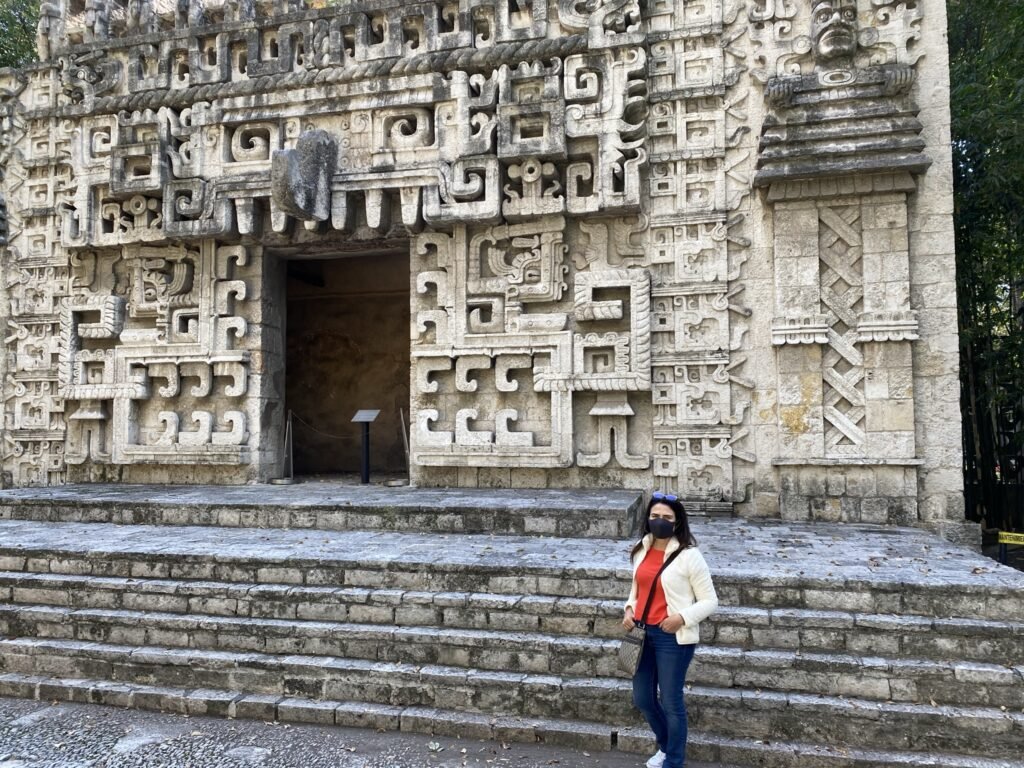
Gallery after gallery, Michelle continued weaving her magic until we reached an open courtyard where full-scale reconstructions of temples, facades and monuments gave me the fleeting impression that we had stepped into worlds that had disappeared centuries ago.
By then, there was only one thing on my mind: my next culinary adventure.
That afternoon also brought a new experience. I tried escamoles — a delicacy made from ant eggs, often referred to as Mexican caviar.
When Michelle told me what they were, I have to admit I hesitated for a moment. But curiosity quickly won — especially because she described them with such genuine enthusiasm that I was almost certain I was going to like them.
The hardest part was forgetting what I was eating. Once I managed that, what struck me most was how familiar the flavor was: buttery and surprisingly delicate.
Behind the Blue Walls
We arrived in Coyoacán, a charming neighborhood that is home to what is probably the most famous house in Mexico.
There was already a line outside the Blue House of Frida Kahlo. Street vendors filled the sidewalks, selling every kind of souvenir imaginable, but they all had one thing in common — Frida’s face was everywhere.
I even found a face mask. Since wearing one was mandatory, I thought it might as well match the house.
Looking back, it doesn’t seem like such a great idea. But those were hardly ordinary times.
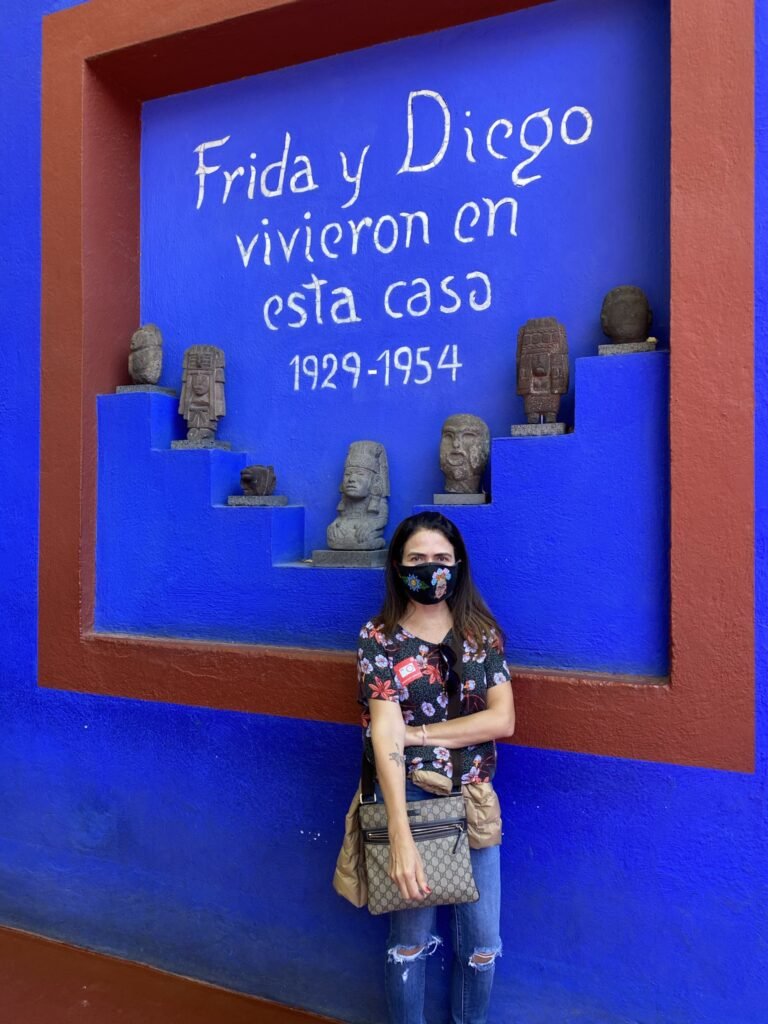
Frida Kahlo’s life and artistic legacy have made her one of Mexico’s most recognizable cultural icons.
Her paintings, however, have never resonated with me in quite the same way they do with so many others.
The Blue House is full of personality — from its vivid blue exterior walls to the bold yellow kitchen — while the courtyard garden is surprisingly peaceful.
Yet amid that sea of vibrant colors, one part of everyday life belonged to a far less cheerful palette.
Her bed, adapted so she could paint self-portraits while lying down, gives tangible form to both her suffering and her resilience.
When I left the house, Frida’s face stamped on countless souvenirs already looked different to me.
Falling for Guanajuato
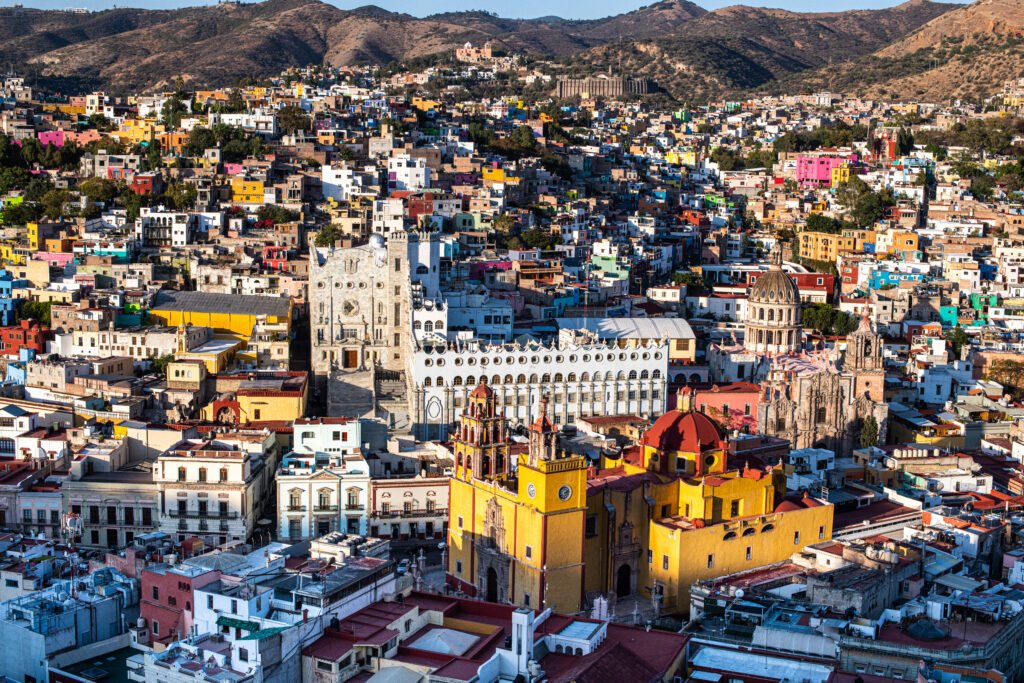
The following morning, a five-hour drive took us to Guanajuato.
Calling it a colorful city hardly does it justice. But there is something else that immediately stands out: the city’s prosperous past. Its luxurious mansions and the magnificent Juárez Theatre are lasting reminders of the silver wealth that once made Guanajuato one of the most important mining centers of New Spain.
For days, I had been surrounded by pre-Hispanic sites. Wandering through Guanajuato’s lively streets offered a welcome change.
And then there was the music.
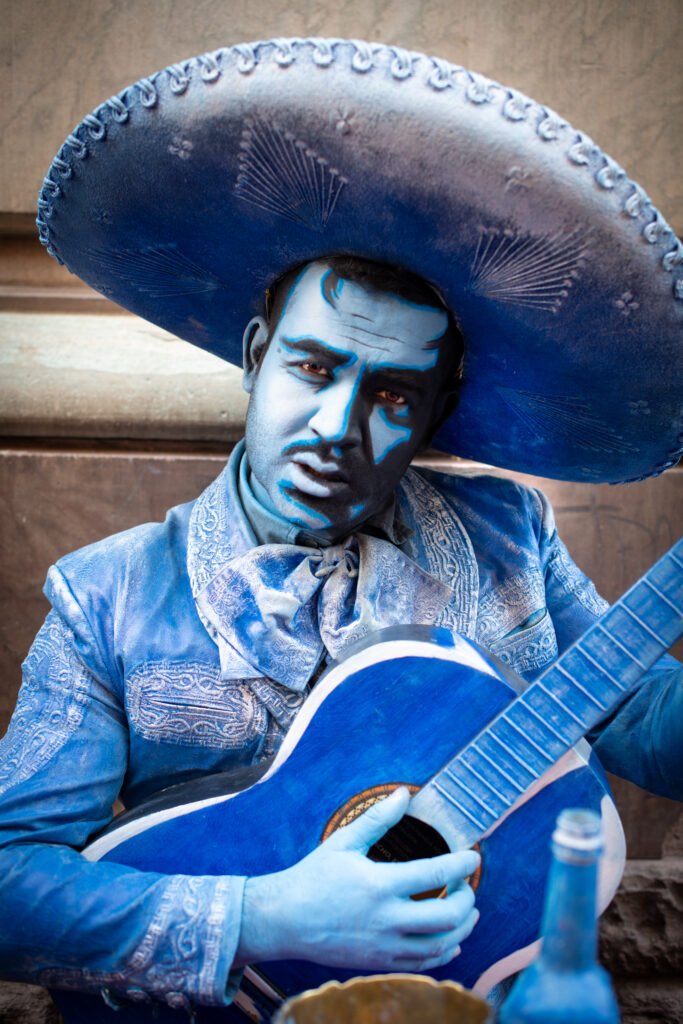
The unmistakable mariachis, dressed in their traditional outfits, filled the streets with songs that made the city even more vibrant. I had imagined they belonged mainly to the tourist experience, but Michelle knew every lyric and happily sang along, making it obvious they were just as much part of everyday Mexican culture.
One of Guanajuato’s greatest pleasures is wandering through the Callejones — the narrow alleys leading to hidden squares and picturesque corners.
Perhaps because of the pandemic, the city had the atmosphere of a small town. With so few visitors around, daily life unfolded at its own pace.
Even with masks partially covering their faces, the relief people felt at seeing tourists return was unmistakable. I hadn’t sensed it nearly as strongly in Mexico City, and I began to understand that I was probably among the first visitors to come back.
The colors, the winding alleys, the music and that warm welcome all came together. I felt embraced — and more alive.
By sunset, we had reached Cerro de San Miguel, one of the city’s best-known viewpoints. From there, an endless mosaic of colorful houses and church towers stretched across the hills surrounding the valley.
Even after sunset, the city refused to slow down.
For a while, we followed one of the traditional callejoneadas — groups of musicians who wander through the alleys singing, telling stories and inviting everyone to join them — before eventually returning to a tradition of our own: margaritas.
That night, the margaritas somehow tasted even better.
A Taste for the Unexpected
Visiting San Miguel de Allende and Guanajuato is almost a tradition, so on our way back to Mexico City we stopped in San Miguel.
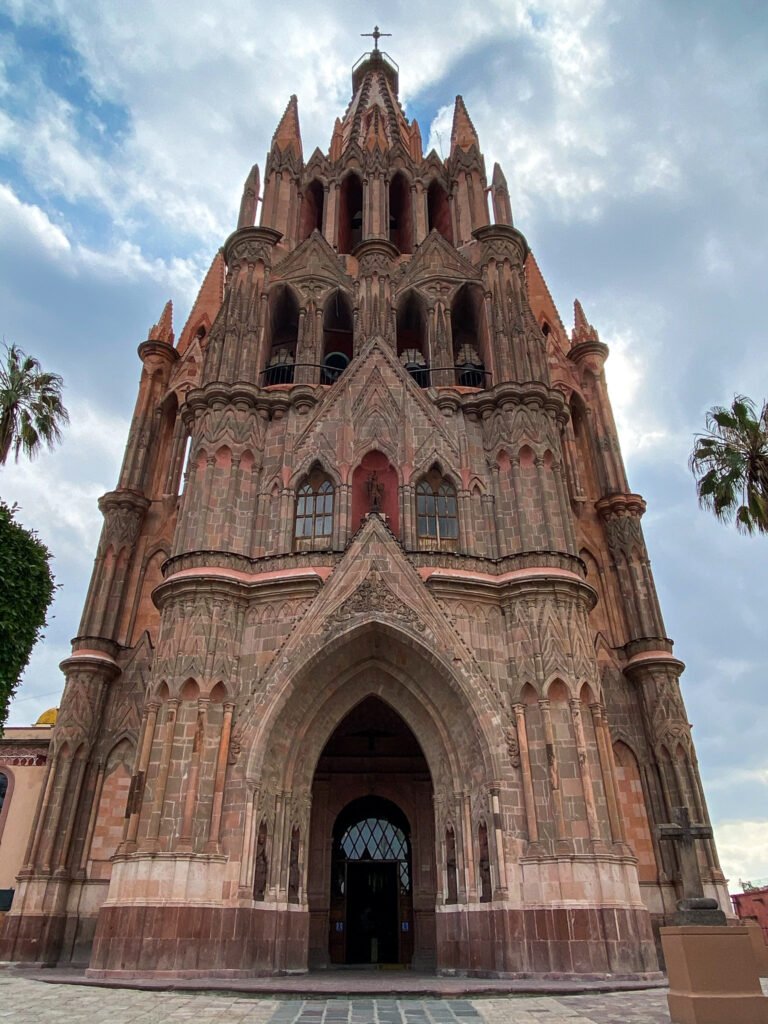
The pink towers of the Parroquia de San Miguel Arcángel dominate the historic center. Together with its cobblestone streets and elegant colonial mansions, it’s easy to understand why the city has been designated a UNESCO World Heritage Site.
Although they may sound similar on paper, Guanajuato and San Miguel could hardly have seemed more different.
San Miguel seemed larger and more refined. Its galleries, ateliers and artistic community gave it a distinctly cosmopolitan atmosphere.
Without taking anything away from San Miguel, however, the strongest memory I brought home wasn’t one of its landmarks.
At one point, we stopped at a street vendor selling fresh fruit, peeled and cut into bite-sized pieces.
Michelle ordered a cup of mango.
Then I heard a familiar word.
“Chilli.”
I had been admiring the pink facade of the church but immediately turned around.
“Did you just say chilli?”
She nodded, completely unfazed.
“Trust me.”
I watched, fascinated, as the vendor sprinkled chilli powder over the mango, added salt, poured a bright red sauce on top and finished it all with a generous squeeze of lime.
I have to admit I was convinced she had just ruined a perfectly good mango.
She hadn’t.
The combination might sound strange at first.
Trust me. It isn’t.
Before heading back to Mexico City, we made one last stop near San Miguel de Allende.
When I first read the itinerary, I could hardly believe my eyes. It turned out that Sandra — my travel agent — had told Michelle about my passion for wine, and together they had arranged a wine tasting just outside San Miguel.
The winery, which also operates as a boutique hotel, is surrounded by peaceful vineyards and beautiful countryside — the perfect place to slow down for a few hours over a few glasses of wine, a plate of cheese and bread, and their own olive oil.
Apparently, margaritas were not our only common ground.
Framing Mexico
My last day in Mexico City started with a visit to the Franz Mayer Museum.
The German businessman left behind a varied collection of decorative arts, rare books, furniture, paintings, sculptures and everyday objects, with the wish that they would remain in Mexico.
I doubt he could ever have imagined the setting they would one day call home.
Housed in a former sixteenth-century hospital built around a beautiful cloister, the museum resembles an elegant colonial residence more than a traditional museum.
I had already visited history’s great temples, so Mexico’s great temple of art seemed the perfect conclusion.
Like many Latin American capitals, Mexico City looked to Europe in an effort to shape a cosmopolitan image.
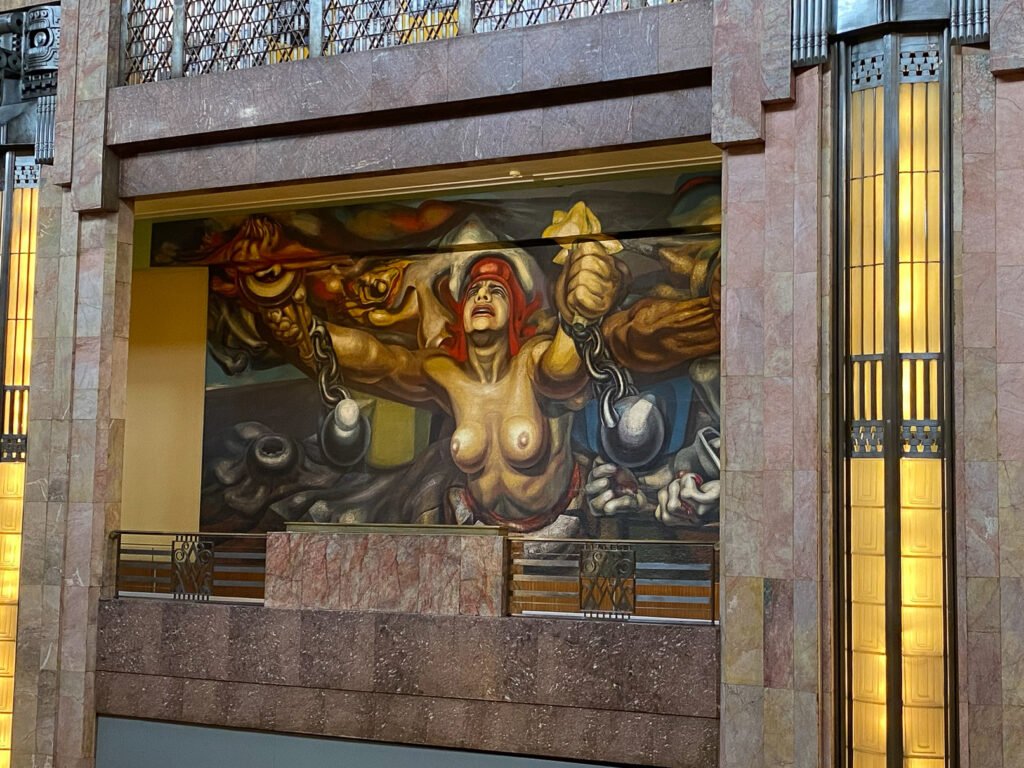
The Palace of Fine Arts reflects that European influence, but everything inside speaks unmistakably of Mexico.
✦ Footnotes from Elsewhere
After the Mexican Revolution, the government commissioned public murals to educate a broad audience and help shape a shared national identity. Diego Rivera turned those walls into vast visual narratives, tracing Mexico’s story from its pre-Hispanic civilizations to the modern era.
Standing beneath those enormous murals, I felt dwarfed.
Trying to take them in as a whole, I gradually stepped farther back until I found myself on the opposite side of the hall. From there, the building itself seemed to frame Rivera’s powerful figures.
It was almost as though every one of Rivera’s murals was saying the same thing:
“This is who we are.”
The time had come to say goodbye to Michelle, and neither of us was particularly happy about it.
As I boarded my flight to Cancún to continue my journey, I had no idea that this wouldn’t be our last goodbye.
Under the Yucatán Sky
Like Rio, Cancún simply doesn’t seem to belong under cold, gloomy skies.
On the way to Chichén Itzá, rain began pouring down. I could hardly believe that this was happening on the very day I was about to visit one of the New Seven Wonders of the World.
I shared my frustration with Flavio, my guide.
“Don’t worry. The weather here can change completely in a matter of minutes.”
I looked out of the window. There wasn’t even the slightest patch of blue in sight. As much as I wanted to believe him, I suspected he was merely trying to cheer me up.
Trying to buy some time, he suggested we stop for coconut water at a roadside stand.
And there we went again: the vendor casually offered chilli.
“Yes, please. And salt too — or any other spices you think belong there.”
By then, I wanted to try every unconventional combination Mexico placed in front of me. I didn’t even have to think about it.
And yes, coconut water with chilli was good too.
I had always loved sweet and savory together. Now I was beginning to understand the appeal of chilli with something sweet.
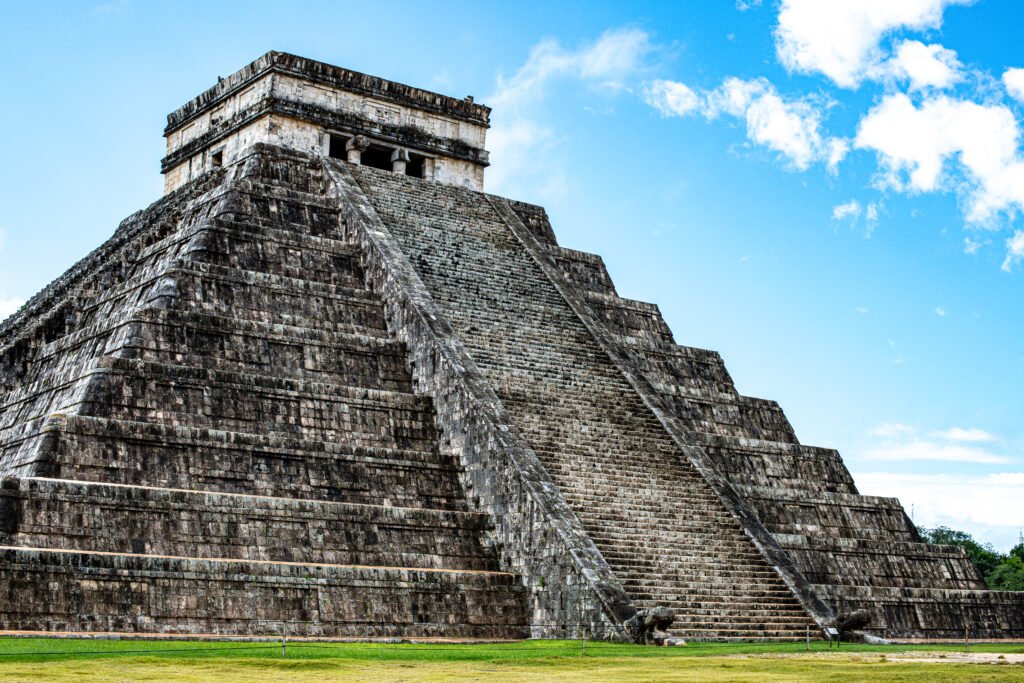
Somewhere between the car park and the moment El Castillo appeared before me, the rain stopped. Then, out of the blue, the sky cleared completely.
That expression had never seemed so accurate.
✦ Footnotes from Elsewhere
Hidden inside El Castillo (Kukulcán temple) is an older pyramid, and within it archaeologists discovered a red jaguar throne decorated with hundreds of pieces of jade. Rather than replacing earlier structures, successive Maya rulers built new pyramids over existing ones, preserving centuries of history within the monument itself.
For a few moments, El Castillo made everything around it disappear.
Its presence dominates the open plaza, but the craftsmanship fascinated me even more. The stones of the staircase had been cut with such precision that they almost looked polished.
Across the terraces, the stonework formed geometric patterns rather than simple rows of stacked blocks.
It was not only a masterpiece of engineering, but of design as well.
Flavio then told me about one of El Castillo’s most famous features. During the equinoxes, light and shadow combine to create the illusion of a serpent slithering down the pyramid’s northern staircase until it appears to meet the carved serpent heads at its base.
I had to look it up online to understand what he meant. I suspected it might be one of those effects that only become visible if someone points them out first.
It wasn’t.
The very first image I found made the serpent unmistakable. No imagination required.
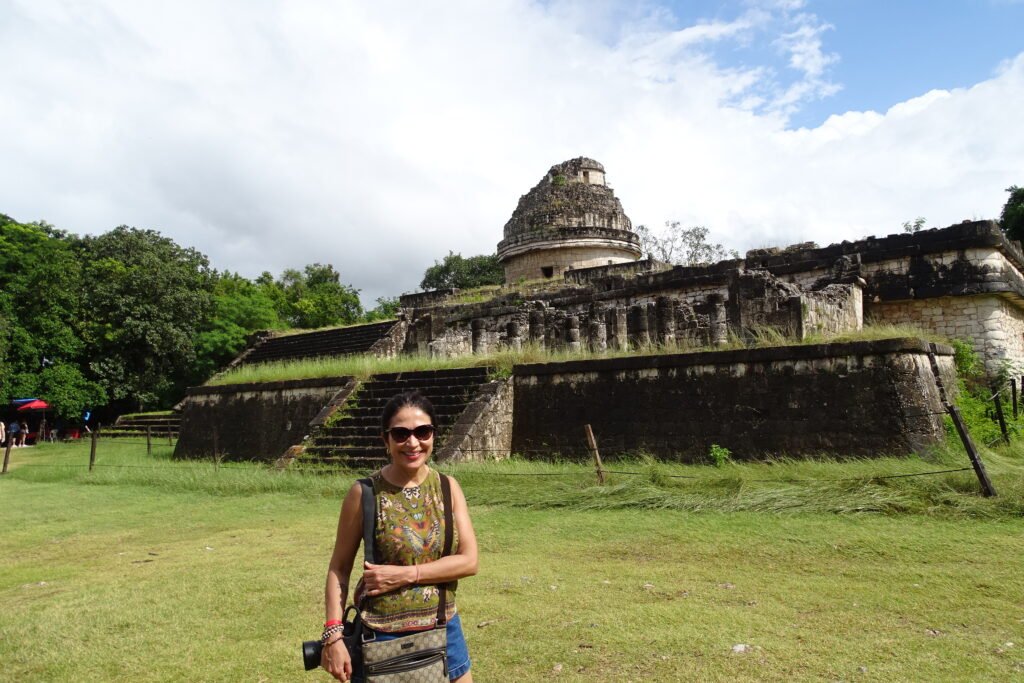
Among the temples, ceremonial platforms, residences and administrative buildings, one rounded structure immediately stood apart: El Caracol.
✦ Footnotes from Elsewhere
El Caracol (“The Snail”) takes its name from the spiral staircase hidden inside the tower. Although its exact purpose remains uncertain, many archaeologists believe it was used to observe the sky, with openings aligned to important astronomical events—a testament to the sophistication of Maya astronomy centuries before the invention of the telescope.
Tulum offered an entirely different perspective.
There is no towering pyramid demanding your attention. Instead, the site feels more like a coastal settlement than a great ceremonial center, giving it a quieter and more intimate atmosphere than Chichén Itzá.
That doesn’t mean you’ll miss the grandeur. Quite the opposite.
The contrast between the pre-Hispanic stone structures and the turquoise waters of the Caribbean is so striking that it hardly seems real. It is one of those landscapes that stays with you long after you leave.
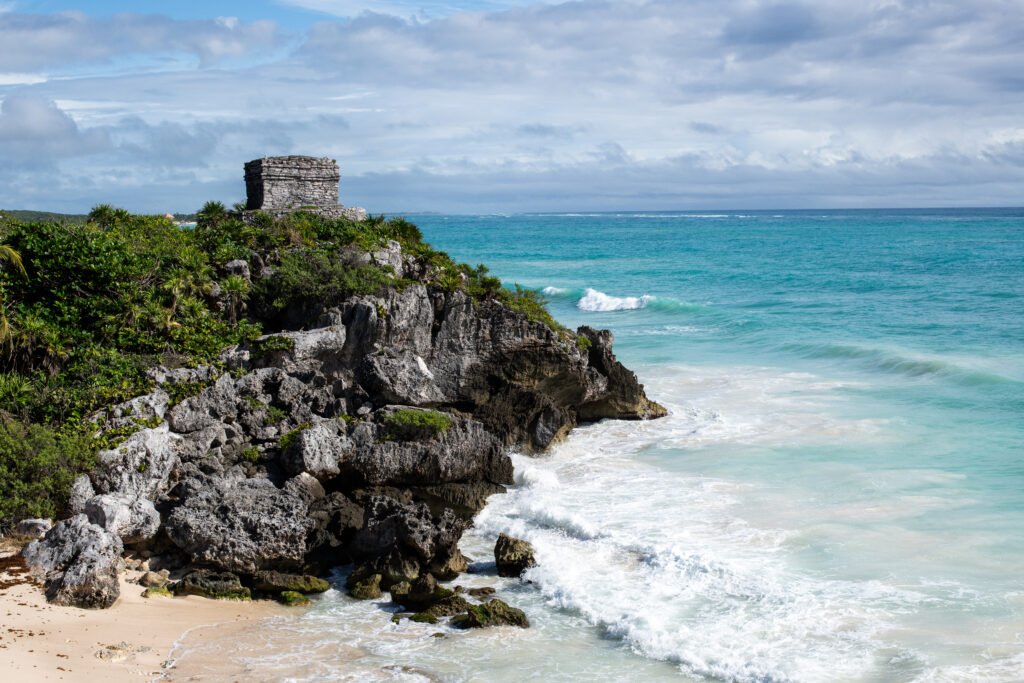
Like Chichén Itzá, Tulum also has its own El Castillo. Rather than dominating a vast ceremonial complex, Tulum’s El Castillo stands on the edge of the cliff with its back to the sea and its staircase facing the rest of the archaeological site.
As I wandered among the stone buildings scattered along the coastline—many of them resembling houses—it was easy to imagine Tulum as a peaceful seaside town. I would never have guessed that it had once been one of Maya’s most important trading ports.
Not only engineering. Not only astronomy. Not only design. Commerce, too.
Looking at that coastline, I couldn’t help hoping the Maya sometimes stopped to admire it too.
See You Soon
Some friendships end when the trip is over. Ours didn’t.
I returned to Mexico in 2021 to spend a week with Michelle and her family.
She had planned an itinerary filled with culture and gastronomy. This time, however, one important ingredient was added: street food. It drew me even deeper into Mexican culture.
Like the wine list from Slovenia, the list of foods Michelle introduced me to still surprises me today because of how much we managed to try.
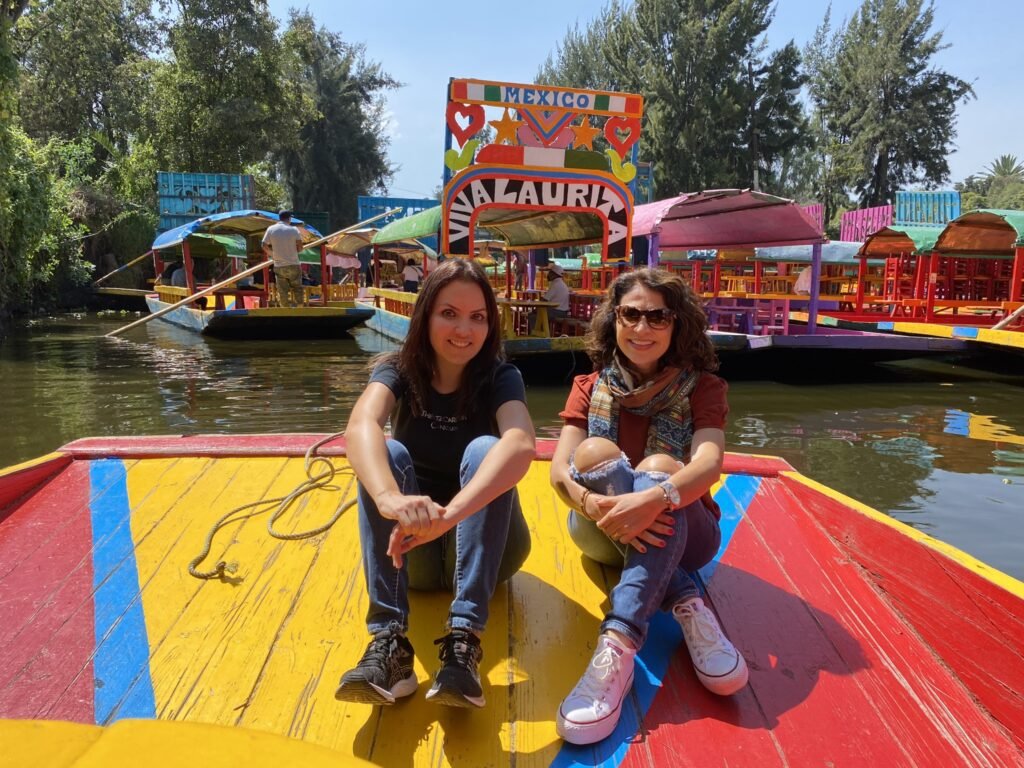
By then, fruit ice cream with chilli had become perfectly normal.
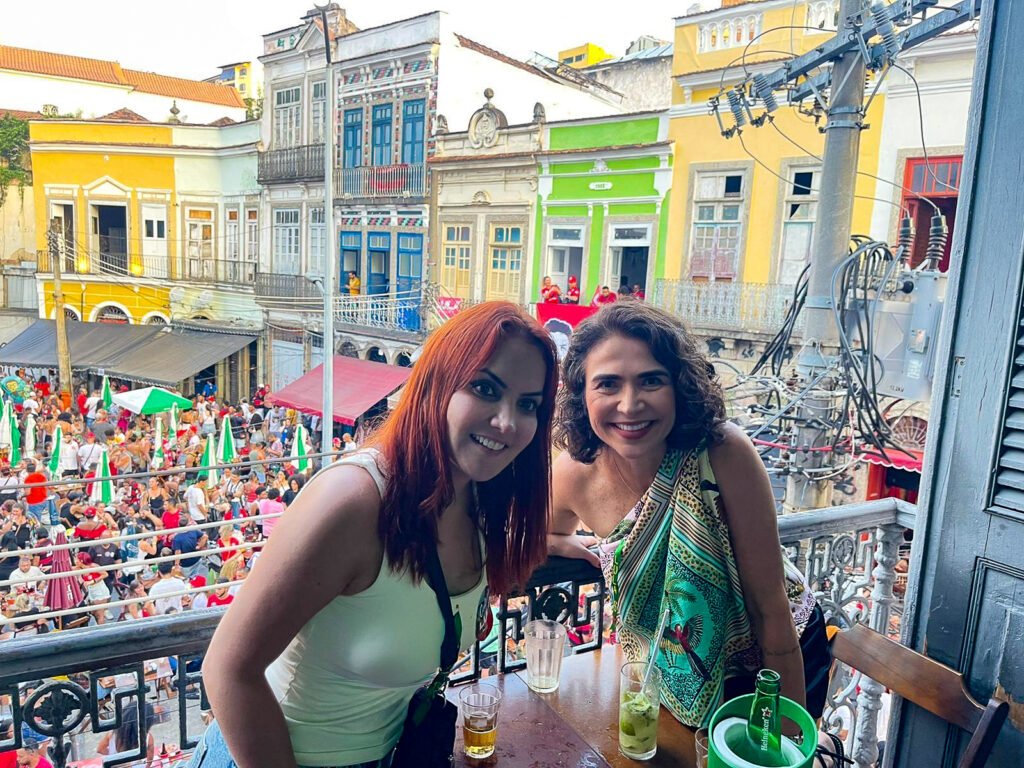
Then, in 2022, it was Michelle’s turn to visit me in Rio de Janeiro.
I took her to Largo de São Francisco da Prainha, one of my favorite places for bars and samba. As if that weren’t enough, it also happened to be the day of Brazil’s presidential runoff, which ended with Lula being elected to a third term.
The place was packed.
We were sitting around a large table with a group of friends, sharing drinks and snacks, when one well-known local bohemian ordered a generous plate of food. As soon as it arrived, the waiter placed a jar of traditional Brazilian hot sauce on the table — a mixture of whole red and green peppers preserved in oil.
From the other side of the table, Michelle was watching everything with growing curiosity.
He made quite a point of generously covering his food with hot sauce, making sure everyone at the table noticed.
She waited until he had taken a bite before asking,
“Is the hot sauce good?”
With a slightly smug smile, he replied,
“Yes… but it’s very hot. Be careful…”
Michelle grabbed the jar, asking the waiter to bring a fork.
By then, everyone at the table was watching.
Without the slightest hesitation, Michelle calmly opened the jar, picked out one of the largest peppers and almost ate it whole. Not a blink. Not a tear. She simply chewed thoughtfully before delivering her verdict:
“Yeah… it’s okay.”
For a second, the entire table fell silent.
Then everyone burst into laughter.
No one could believe what they had just witnessed — least of all the man who had warned her. He simply stared at Michelle as though he had just encountered an alien.
Adorei as estórias do México
Sempre uma surpresa de pais ! Uma surpresa agradável !
Verdade, foram muitas surpresas maravilhosas. Obrigada.