These Ajanta and Ellora travel stories unfold through caves carved into stone centuries ago, where art, faith and history remain remarkably alive.
Ajanta Caves — One of India’s Most Overlooked Wonders
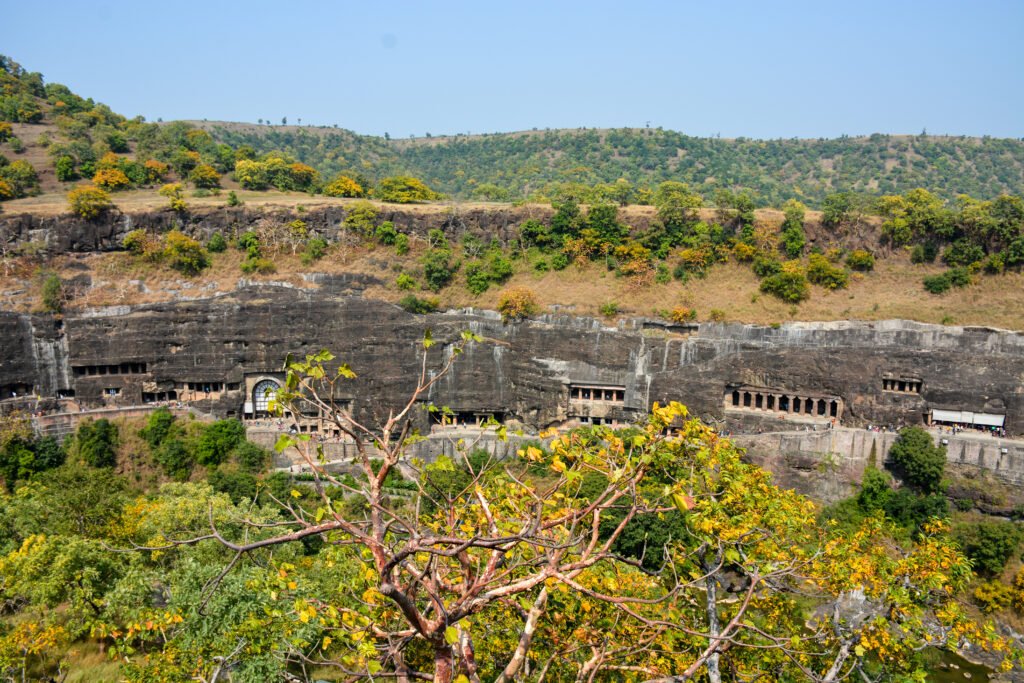
The first time I heard about the Ajanta and Ellora Caves was while planning this trip. My travel agent — who knew me well enough by then — suggested adding them to the itinerary.
I took a two-and-a-half-hour flight from Delhi to Aurangabad — now called Chhatrapati Sambhajinagar — the city that served as a base for exploring the caves.
From Aurangabad, it was another two-and-a-half-hour drive to reach Ajanta.
The complex is made up of around 30 caves, carved into a steep slope in a horseshoe-shaped valley.
✦ Footnotes from Elsewhere
The Ajanta Caves are a series of rock-cut Buddhist monasteries and temples carved into a cliff developed over several centuries, from around the 2nd century BC to the 6th century AD, reflecting different phases of Buddhist practice.Two main periods of construction can be identified:
• between the 2nd century BC and the 1st century AD (early phase)
• and between the 5th and 6th centuries AD (more elaborate phase)The earlier caves are simpler monastic spaces, while the later ones became more refined temples, marking a clear evolution in both religious and artistic expression.Many functioned as viharas (monastic residences) and chaityas (prayer halls), showing how the site served both daily life and spiritual practice.
What makes this UNESCO World Heritage Site even more intriguing is the fact that the caves were gradually abandoned from around the 7th century, only to be rediscovered in the 19th century.
According to the most repeated account, a British officer was hunting in the area when he suddenly found himself facing the hillside and noticed what turned out to be one of the cave entrances.
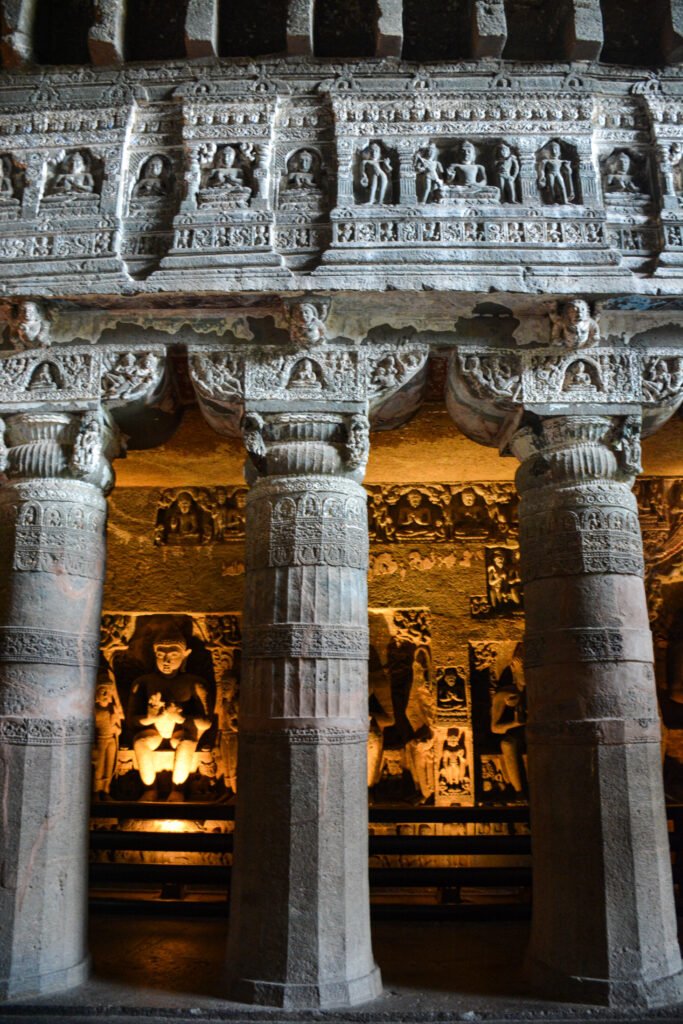
The work on the cave facades — some with richly elaborate columns arranged with precision, others with geometric portals — already hinted that something extraordinary lay behind them.
I stepped into one of the caves. As soon as my eyes adjusted to the darkness, a temple with walls and ceilings covered in finely worked paintings slowly came into view.
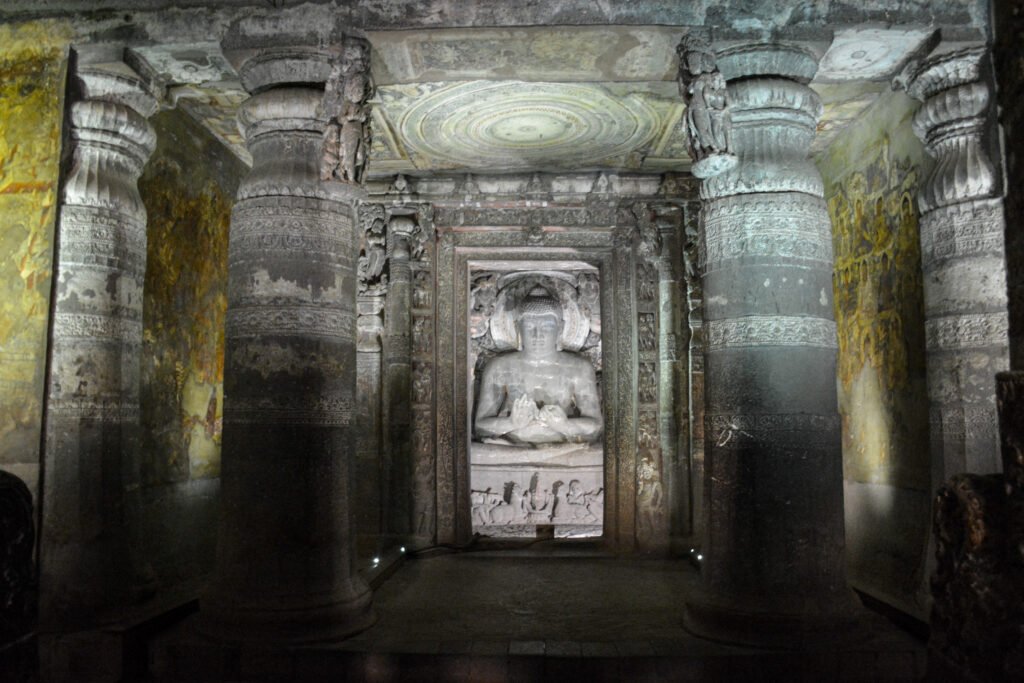
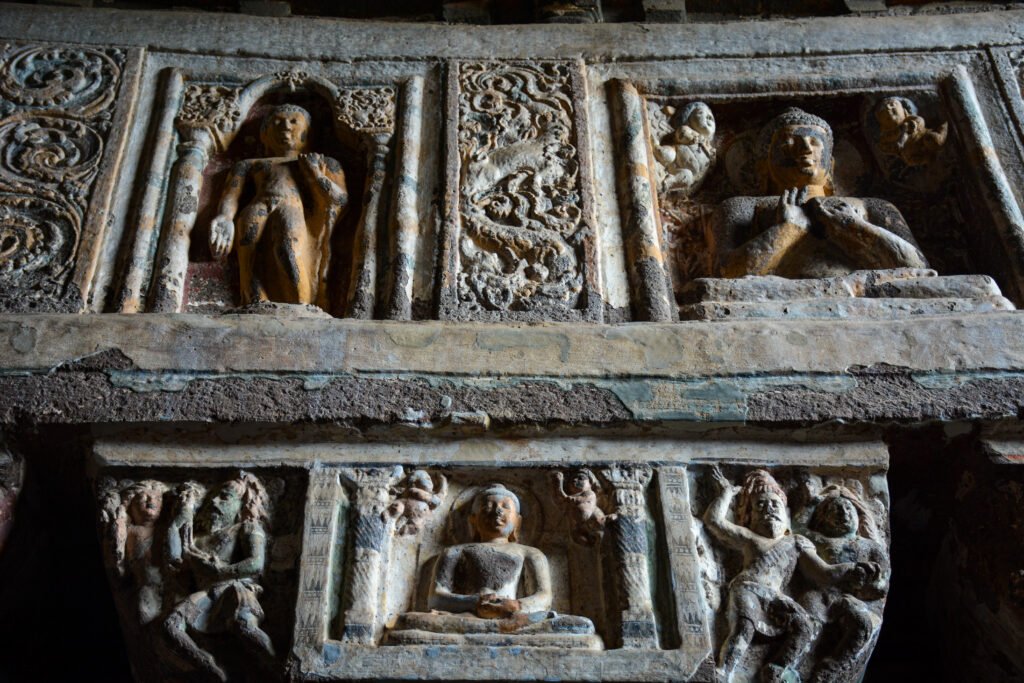
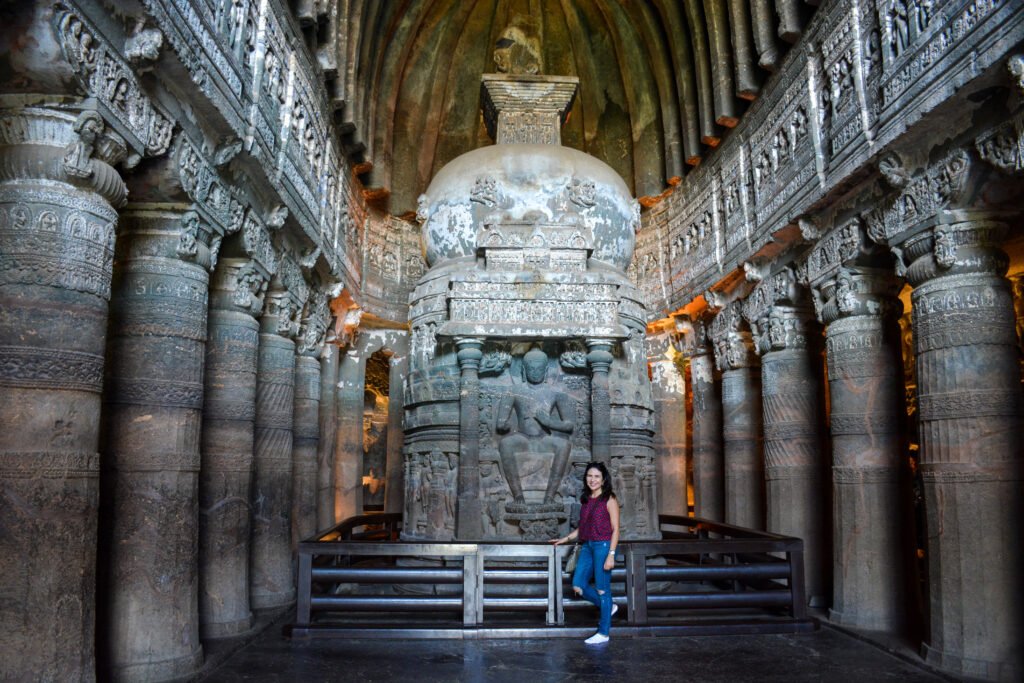
At the back stood a Buddha. There were many others throughout the complex, in different postures and settings.
The simple fact that there are not just one or two, but around 30 temples and monasteries cut into the rock is already astonishing. Even more so when you realize how rich — and how carefully balanced — the work is.
Beyond the monumental carving itself, the caves are especially famous for its murals, which depict scenes from the Buddha’s past lives as well as everyday life, using remarkably sophisticated techniques to convey human expression, movement and emotion.
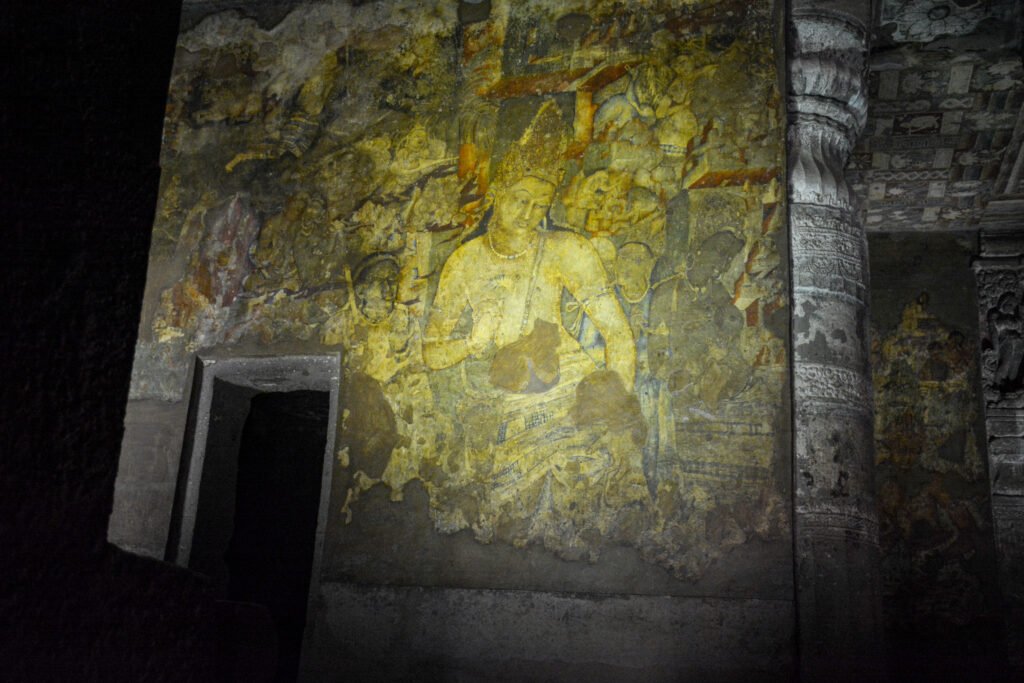
The murals are hard to ignore not only for their beauty and grace, but also for their resilience. Even in the darkness, and despite partial deterioration, the richness of the colors is still visible.
The more I saw, the harder it became to take it all in.
Traditional elements like stupas appeared throughout the complex, often surrounded by columns and accompanied by narrative reliefs and sculptures. Others were less ornate, but still carefully structured, serving as monks’ living quarters.
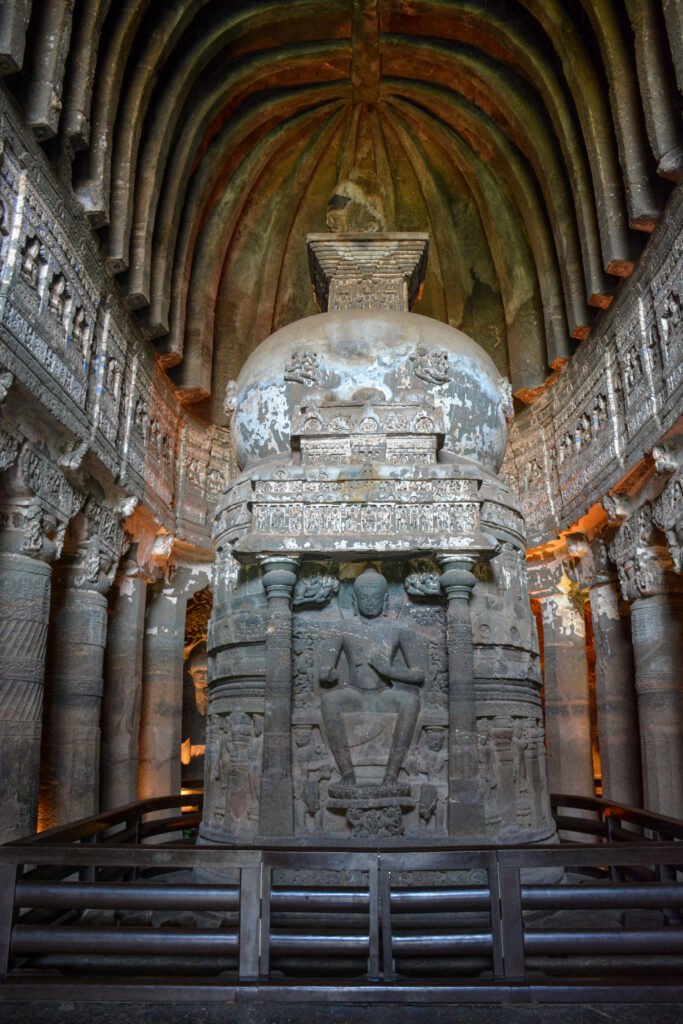
The amount of information was overwhelming, and it slowly began to take over. I wanted to visit all the open caves — and I did — but eventually, my mind could no longer absorb it all.
I spent an entire day exploring Ajanta, and by the end, I needed to slow down.
Ajanta needs to be seen slowly and attentively. Not in a hurry.
Time is needed to absorb the art that reveals itself as the darkness begins to lift.
And while I was in the middle of that process, a few questions kept returning to me:
How had they managed to carve all that so many centuries ago?
How on earth had I never heard of this place before?
It didn’t fit into anything I thought I knew about India.
By the end of the trip, the caves had risen to the top of my list of the most unforgettable places I had ever seen — side by side with Petra, the pyramids and the Roman Forum.
A place where art, architecture and religion converge.
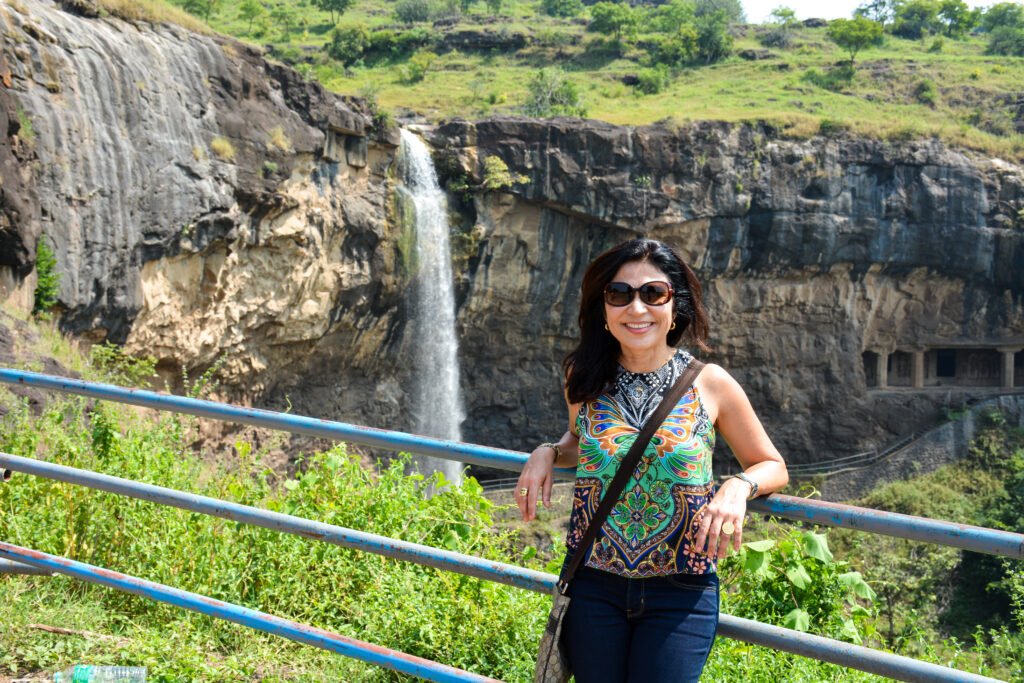
To end the day, I crossed a bridge to reach the viewpoint from which the British officer is said to have first seen the caves.
From a distance, the scale is impossible to ignore — and so are the rectangular entrances, some lined with columns, spread across the slope.
Ellora Caves — Where Three Religions Meet in Stone
The next morning, on my way to the Ellora Caves, I was excited — but not entirely sure they would impress me as much as Ajanta.
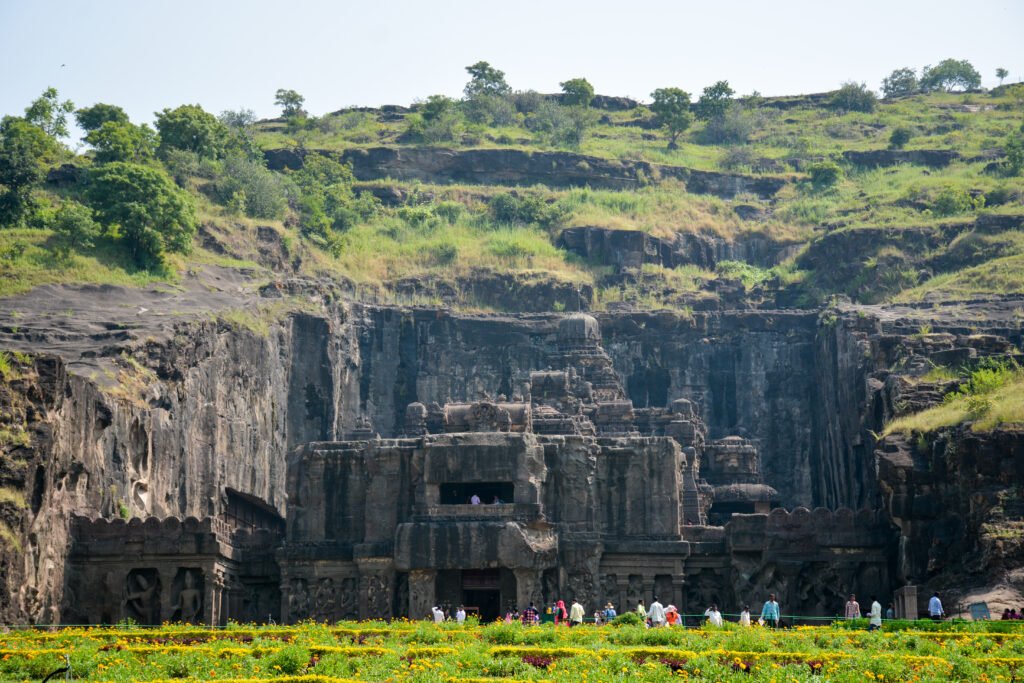
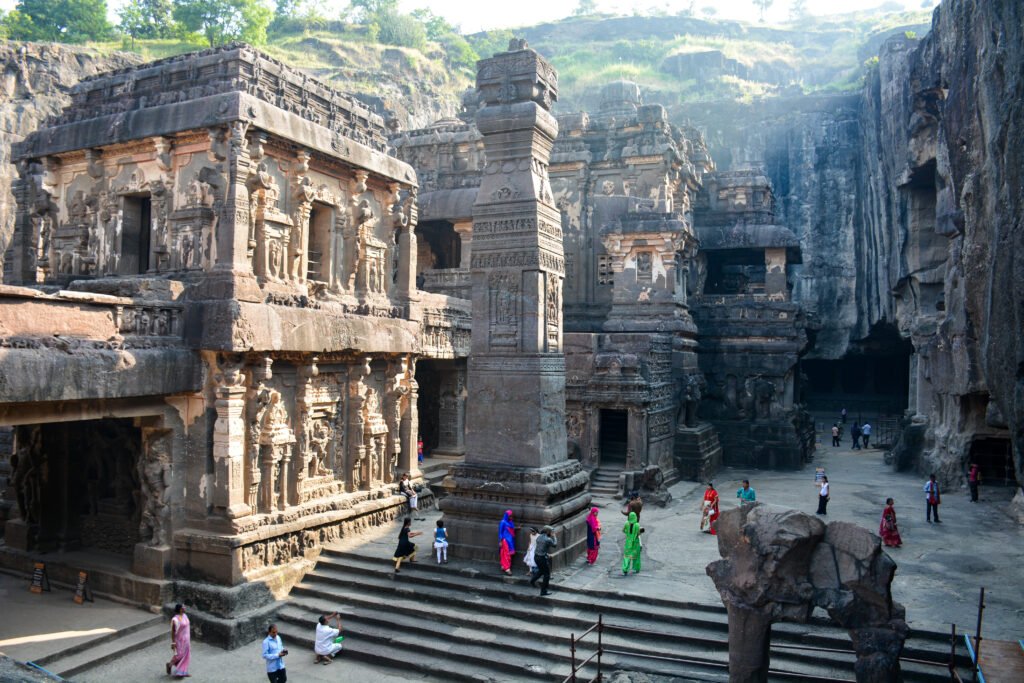
But the moment I stepped into the Kailasa Temple, I had no doubt they would.
Even something that seems as unchanging as a cave can still surprise you in India.
Although both are rock-cut temples and monasteries, one key difference stands out:
Ellora brings together three different religions, rather than focusing solely on Buddhism as in Ajanta.
✦ Footnotes from Elsewhere
The Ellora Caves were excavated from the cliff between the 6th and 10th centuries AD, forming one of the largest rock-cut complexes in India.The site is remarkable for bringing together three major religions in a single location:
• Caves 1–12 — Buddhist (6th–7th centuries AD)
• Caves 13–29 — Hindu (7th–9th centuries AD)
• Caves 30–34 — Jain (9th–10th centuries AD)This coexistence of different traditions, carved side by side in the same cliff, reflects a history of religious tolerance and cultural exchange.
The largest and most striking structure is the Kailasa Temple (Cave 16), dedicated to Shiva, carved from top to bottom out of a single rock.
At first glance, it looks like a constructed temple, with courtyards, sculptures, corridors and galleries.
But it wasn’t built onto the rock — it was shaped from it.
A sculpture in essence, yet architectural — and on a scale that can only be fully understood when you are there.
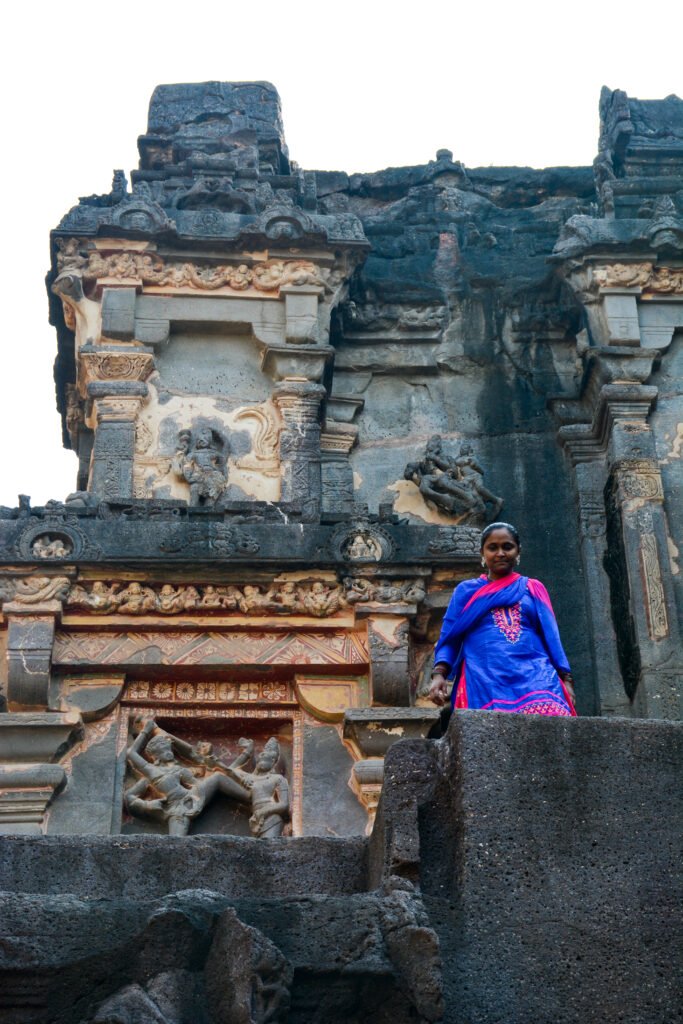
It is also meticulous, with narrative reliefs, sculptures and intricate decorative elements spread throughout the structure.
I already thought the place couldn’t be more stunning.
That’s when I noticed areas where traces of yellow and red pigments still remained.
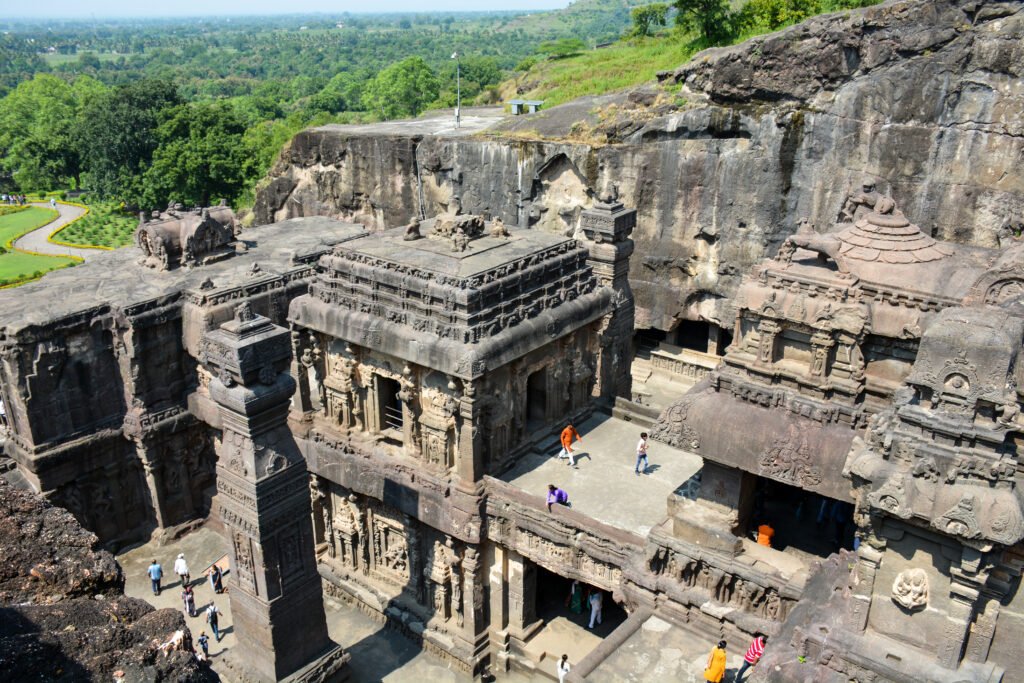
My mind drifted, imagining the entire temple once covered in those colors.
Yes — it was even more than I had imagined.
Although they are called caves, some don’t resemble what I usually think of as caves.
The Kailasa itself is one example. Another is Cave 10 – a Buddhist cave – which, from the outside resembles a temple, and inside feels almost like a cathedral.
Walking along the two-kilometer path cut into the hillside, I kept encountering caves in completely different forms — temples, façades reminiscent of those in Ajanta, and even one that looked uncannily like a three-story building, its facade shaped directly from the rock.
I was especially curious about the Jain caves, as it was a religion I had never come across before.
Inside one of them, I noticed numerous sculptures.
From my confused expression, the guide smiled and said:
“They are not Buddha. They are Tirthankaras.”
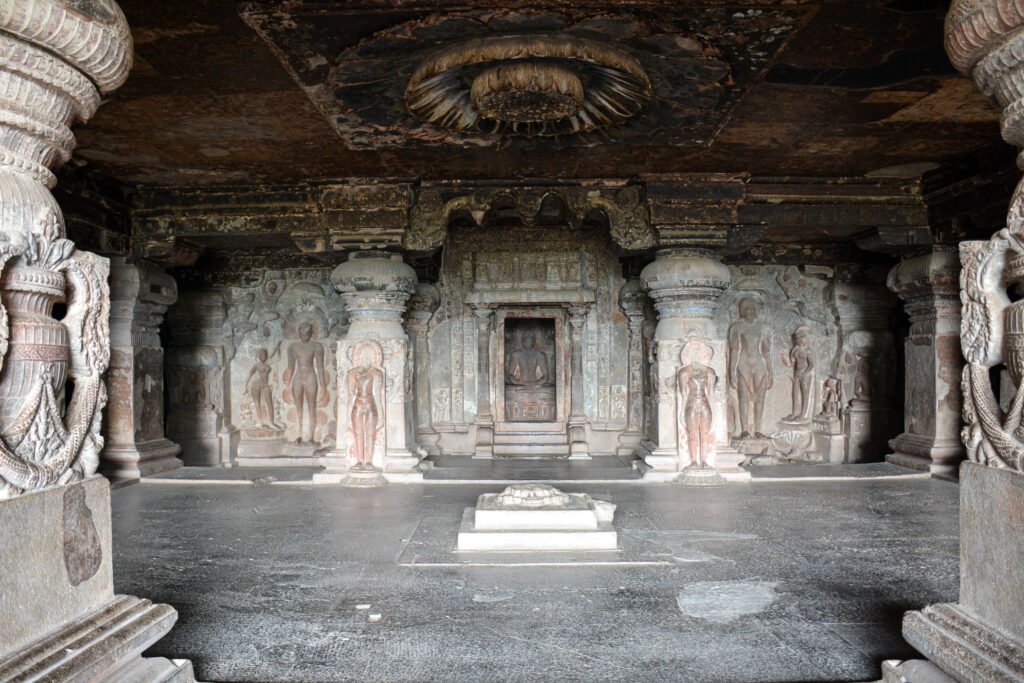
Spiritual figures who attained enlightenment and are revered as teachers.
✦ Footnotes from Elsewhere
Jainism is one of the oldest religions in India, with origins dating back to around the 6th century BC.Its core principle is ahimsa (non-violence), influencing not only actions but also diet and daily life. Many Jains follow strict vegetarianism and, in some cases, wear cloth over the mouth to avoid harming even the smallest living beings.
Beyond the sculptures, there were also delicate patterns and a strong sense of order.
What struck me most was how these three religions created such remarkable temples — each in its own way — yet sharing the same space in harmony.
I left — after what felt like endless exploring — still unable to understand how all of this had been built.
By the end of my visit to Ajanta and Ellora, I was even more struck by what human beings were capable of creating centuries ago.
And with that, a familiar feeling returned –
the desire to keep discovering places like this.
I could easily spend a lifetime doing just that.
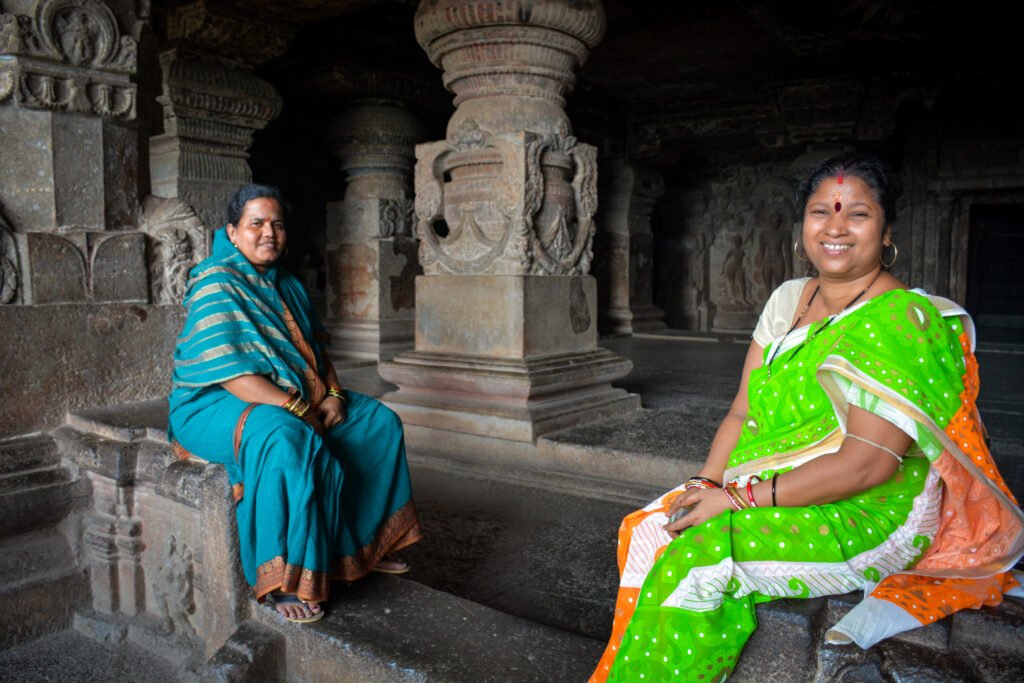
I left still thinking about how they remain surprisingly overlooked — though it’s easy to imagine them one day standing alongside India’s most iconic sites.
And I was deeply grateful to my travel agent.
Without her suggestion, I would have missed one of the most defining moments of this trip.
Just like you, I had never heard of Ajanta & Ellora before. And that’s exactly what makes travel so special to me. Discovering these hidden gems that aren’t on most people’s radar is often far more exciting than visiting the famous tourist hotspots. Places like this are the ones that stay with us long after the trip is over. Loved this post!
Thank you, Val! ❤️ That’s exactly how I feel too. The world-famous landmarks are wonderful, but it’s often the unexpected places that leave the deepest impression. Ajanta & Ellora surprised me in ways I never imagined, and I’m so glad you enjoyed reading about them.